Showing posts with label This is my Canada. Show all posts

Saturday, November 5, 2011

0ld Ice Dreams

Inspired is a feeling I wish I could tap into more often. We were feeling inspired one day last winter and came up with these great ice sculptur-esque creations. I like how the shapes suggest the boats in the background.  This fall, I'm wonder what initiates that feeling of inspiration?

Maybe it is spending time with ideas or in the company of creative people. Sometime that can seem intimidating too though. I'm often inspired by students as they are struggling to acquire a skill, they are experimenting and open to ideas I can sometimes grab hold of...one thing for sure though, is that you have to make time for it and be open to the having fun.

Sunday, June 19, 2011

Confusius Says: Writing with a light tone will hold the readers atttention


Very fun and interesting read. While the book is sweetened  by the history of a cookie and other "Chinese" treats we know only too well in North America (-because they don't actually exist outside of the America-Chinese cuisine), the real substance of the book examines the immigrant history and experience through the context of explaining menu items. 

 While this book is written from an American perspective, there is an interesting call out to Vancouver and I easily transposed many of the historical observations and implications to the Chinese immigrant experience to Canada. Recommend for a light but insightfully fun read.


Monday, November 9, 2009

Swine Flu Musical Propaganda by the CBC


S omething fun for the flu season... Fingers crossed I stay healthy!

Monday, November 2, 2009

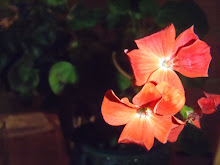
Different Red Flowers. Same Respect and Remembrance

The Legend of Deadman's Island
Coal Harbour and Deadman's Island from the bridge by Lost Lagoon
                It is dusk on the Lost Lagoon,
                And we two dreaming the dusk away,
                Beneath the drift of a twilight grey -
                Beneath the drowse of an ending day

             And the curve of a golden moon.
 
                It is dark in the Lost Lagoon,
                And gone are the depths of haunting blue,
                The grouping gulls, and the old canoe,
                The singing firs, and the dusk and - you,
                And gone is the golden moon.

 
                0! lure of the Lost Lagoon -
                I dream to-night that my paddle blurs
                The purple shade where the seaweed stirs -
                I hear the call of the singing firs
                In the hush of the golden moon.


  The following story and poem are both taken from E. Pauline Johnson's, Legends of Vancouver. First published 1911.            


 For many minutes we stood silently, leaning on the western rail of the bridge as we watched the sunset across that beautiful little basin of water known as Coal Harbour. I have always resented that jarring, unattractive name, for years ago, when I first plied paddle across the gunwale of a light little canoe, and idled about its margin, I named the sheltered little cove the Lost Lagoon.
This was just to please my own fancy, for, as that perfect summer month drifted on, the ever- restless tides left the harbour devoid of water at my favorite canoeing hour, and my pet idling-place was lost for many days-hence my fancy to call it the Lost Lagoon. But the chief, Indian-like, immediately adopted the name, at least when he spoke of the place to me, and, as we watched the sun slip behind the rim of firs, he expressed the wish that his dug- out were here instead of lying beached at the farther side of the park.

"If canoe was here, you and I we paddle close to shores all 'round your Lost Lagoon: we make track just like half-moon. Then we paddle under this bridge, and go channel between Deadman's Island and park. Then 'round where cannon speak time at nine o'clock. Then 'cross Inlet to Indian side of Narrows." 

I turned to look eastward, following in fancy the course he had sketched. The waters were still as the footsteps of the oncoming twilight, and floating in a pool of soft purple, Deadman's Island rested like a large circle of candle-moss. 

"Have you ever been on it?" he asked as he caught my gaze centering on the irregular outline of the island pines. 

"I have prowled the length and depth of it," I told him, "climbed every rock on its shores, crept under every tangled growth of its interior, explored its overgrown trails, and more than once nearly got lost in its very heart." 

"Yes", he half laughed, "it pretty wild; not much good for anything." 

"People seem to think it valuable," I said. "There is a lot of litigation - of fighting going on now about it." 

"Oh! that the way always," he said, as though speaking of a long accepted fact. "Always fight over that place. Hundreds of years ago they fight about it; Indian people; they say hundreds of years to come everybody will still fight - never be settled what that place is, who it belong to, who has right to it. No, never settle. Deadman's Island always mean fight for some one." 

"So the Indians fought amongst themselves about it?" I remarked, seemingly without guile, although my ears tingled for the legend I knew was coming. 

"Fought like lynx at close quarters," he answered. "Fought, killed each other, until the island ran with blood redder than that sunset, and the sea-water about it was stained flame colour - it was then, my people say, that the scarlet fire-flower(fireweed) was first seen growing, along this coast." 

"It is a beautiful colour - the fire-flower," I said. "It should be fine colour, for it was born and grew from the hearts of fine tribes-people - very fine people," he emphasized. We crossed to the eastern rail of the bridge, and stood watching the deep shadows that gathered slowly and silently about the island; I have seldom looked upon anything more peaceful.

The chief sighed. "We have no such men now, no fighters like those men, no hearts, no courage like theirs. But I tell you the story; you understand it then. Now all peace; tonight all good tillicums; even dead man's spirit does not fight now, but long time after it happen those spirits fought."

"And the legend?" I ventured. 

"Oh! yes," he replied, as if suddenly returning to the present from out a a far country in the realm of time. "Indian people, they call it the 'Legend of the Island of Dead Men'"

"There was war everywhere. Fierce tribes from the northern coast, savage tribes from the south, all met here and battled and raided, burned and captured, tortured and killed their enemies. The forest smoked with camp-fires, the Narrows were choked with war-canoes, and the Sagalie Tyee - He who is a man of peace - turned his face away from His Indian children. About this island there was dispute and contention. The medicine-men from the North claimed it as their chanting-ground. The medicine-men from the South laid equal claim to it. Each wanted it as the stronghold of their witch-craft, their magic.

"Great bands of these medicine-men met on the small space, using every sorcery in their power to drive their opponents away. The witch-doctors of the North made their camp on the northern rim of the island; those from the South settled along the southern edge, looking towards what is now the great city of Vancouver. Both factions danced, chanted, burned their magic powders, built their magic fires, beat their magic rattles, but neither would give way, yet neither conquered. About them, on the waters, on the mainlands, raged the warfare of their respective tribes - the Sagalie Tyee had forgotten his Indian children.

"After many months, the warriors on both sides weakened. They said the incantations of the rival medicine-men were bewitching them, were making their hearts like children's, and their arms as nerveless as women's. So friend and foe arose as one man and drove the medicine-men from the island, hounded them down the Inlet, herded them through the Narrows, and banished them out to sea, where they took refuge on one of the outer islands of the gulf. Then the tribes once more fell upon each other in battle.

"The warrior blood of the North will always conquer. They are stronger, bolder, more alert, more keen. The snow and the ice of their country make swifter pulse than the sleepy suns of the South can awake in a man; their muscles are of sterner stuff, their endurance greater. Yes, the northern tribes will always be victors. But the craft and the strategy of the southern tribes are hard things to battle against.

"While those of the North followed the medicine-men farther out to sea to make sure of their banishment, those from the South returned under cover of night and seized the women and children and the old, enfeebled men in their enemy's camp, transported them all to the Island of Dead Men, and there held them as captives. Their war-canoes circled the island like a fortification, through which drifted the sobs of the imprisoned women, the mutterings of the aged men, the wail of little children.

"Again and again the men of the North assailed that circle of canoes, and again and again were repulsed. The air was thick with poisoned arrows, the water stained with blood. But day by day the circle of southern canoes grew thinner and thinner; the northern arrows were telling, and truer of aim. Canoes drifted everywhere, empty, or, worse still, manned only by dead men.
"The pick of the southern warriors had already fallen, when their greatest Tyee mounted a large rock on the eastern shore. Brave and unmindful of a thousand weapons aimed at his heart, he lifted his hand, palm outward - the sign for conference. Instantly every northern arrow was lowered, and every northern ear listened for his words.

"'Oh! men of the upper coast,' he said, 'you are more numerous than we are; your tribe is larger, your endurance greater. We are growing hungry, we are growing less in numbers. Our captives - your women and children and old men - have lessened, too, our stores of food. If you refuse our terms we will yet fight to the finish. Tomorrow we will kill all our captives before your eyes, for we can feed them no longer, or you can have your wives, your mothers, your fathers, your children by giving us for each and every one of them one of your best and bravest young warriors, who will consent to suffer death in their stead. Speak! You have your choice.'

"In the northern canoes scores and scores of young warriors leapt to their feet. The air was filled with glad cries, with exultant shouts. The whole world seemed to ring with the voices of those young men who called loudly, with glorious courage:

"'Take me, but give me back my old father.'

"'Take me, but spare to my tribe my little sister.'

"'Take me, but release my wife and boy-baby.'

"So the compact was made. Two hundred heroic, magnificent young men paddled up to the island, broke through the fortifying circle of canoes, and stepped ashore. They flaunted their eagle plumes with the spirit and boldness ofyoung gods. Their shoulders were erect, their step was firm, their hearts strong. Into their canoes they crowded the two hundred captives.

"Once more their women sobbed, their old men muttered, their children wailed, but those young copper-coloured gods never flinched, never faltered. Their weak and their feeble were saved. What mattered to them such a little thing as death?

"The released captives were quickly surrounded by their own people, but the flower of their splendid nation was in the hands of their enemies, those valorous young men who thought so little of life that they willingly, gladly laid it down to serve and to save those they loved and cared for. Amongst them were war-tried warriors who had fought fifty battles, and boys not yet full grown, who were drawing a bow-string for the first time; but their hearts, their courage, their self-sacrifice was as one.

"Out before a long file of southern warriors they stood. Their chins uplifted, their eyes defiant, their breasts bared. Each leaned forward and laid his weapons at his feet, then stood erect, with empty hands, and laughed forth his challenge to death. A thousand arrows ripped the air, two hundred gallant northern throats flung forth a death-cry exultant, triumphant as conquering kings - then two hundred fearless northern hearts ceased to beat.

"But in the morning the southern tribes found the spot where they fell peopled with flaming fire-flowers. Dread terror seized upon them. They abandoned the island, and when night again shrouded them they manned their canoes and noiselessly slipped through the Narrows, turned their bows southward, and this coast-line knew them no more.

"What glorious men!" I half whispered as the chief concluded the strange legend.

"Yes, men!" he echoed. "The white people call it Deadman's Island. That is their way; but we of the Squamish call it Island of Dead Men."

The clustering pines and the outlines of the island's margin were now dusky and indistinct. Peace, peace lay over the waters, and the purple of the summer twilight had turned to grey, but I knew that in the depths of the undergrowth on Deadman's Island there blossomed a flower of flaming beauty; its colours were veiled in the coming nightfall, but somewhere down in the sanctuary of its petals pulsed the heart's blood of many and valient men.
E. Pauline Johnson-Tekahionwake, 1911
Pauline's signature

Postscript
Ironically, the 'Isle of Dead Men' today is a naval base for the Canadian military.   It's history forgotten or unknown, it's very existance is the ultimate in irony, unrealized and unappreciated by the thousands who walk, cycle, or drive past it every day without a glance...
The fireflower (fireweed), whose first appearance caused such terror in the hearts of men, is now seen world-wide, but is no longer seen in its legendary place of origin...

Sunday, November 1, 2009

Victorian Histories in Western Canada

I guess its because I'm finding my place here but recently I've become more and more interested in the histories of Vancouver and surrounding area. Funny thing is that I lived in Calgary a full 24 years and never developed such an interest.

Sources I've recently been reading include Legends of Vancouver, Vancouver A visual History,  online sources like "Past Tense" ( which I wish would publish more) and a great historic documentary of the Japanese-Canadians' love of baseball.

 I also read The Maquinna Line by Norma Macmillan this winter which was an interesting historical (mostly) fiction  book in the same vein.

Saturday, October 31, 2009

Dan Mangan.


 Check out Dan Mangan's latest album on CBC Radio 3 or find out more about him, his projects and his tour dates on his website. I'm loving it.

Tuesday, October 13, 2009

The Way of Water


The supreme good is like water,
which nourishes all things without trying to.
It is content with the low places that people disdain.

Nothing in the world 
is as soft and yielding as water. 
Yet for dissolving the hard and inflexible, 
nothing can surpass it.

The gentlest thing in the world
overcomes the hardest thing in the world.
That which has no substance
enters where there is no space.
This shows the value of non-action.

All streams flow to the sea 
because it is lower than they are. 
Humility gives it its power.

- Tao Te Ching                                         


Something about the above painting always reminds me of the Toa Te Ching so today I decided to go through and see if I could figure out why. Certainly the carved walls of Johnston Canyon speak to the powerful forces of water over time; nevertheless I can't help remembering the roar of water that didn't seem to have anything to do with softness or humility. Maybe the fact that the painting is very serene despite its lively subject, is what makes it interesting.

Tuesday, October 6, 2009

CBC Rocks!


 A playlist from a friend, my brother actually, turned me on to CBC radio on the computer. Really its seems like something I should have guessed at given the CBC's awesome internet archives for television but somehow never did. CBC radio 3  just launched a new site and lets us tune into new and emerging Canadian artists from cross the country and make our own playlists for others to enjoy. The great thing about the new launch is that because the site is all new, the instructions to help user get set up are front and center.  I'm already working on my own  playlist (it's super easy!) and would love to hear from your own playlists if you build one...  What a great way to foster the Canadian music scene and remind myself that I love the CBC. Thanks for the connection brother.

Sunday, October 4, 2009

Unlikely Utopia; The Surprising Truimp of Canadian Pluralism

 
 "Canada is the only place on Earth that has...a national minority group, an Aboriginal population and a substantial immigrant population" p.9


" In Canada Multiculturalism has always been geared toward helping minority groups participate more fully  in Canadian society" p. 10


 "First, resources permitting, the government will seek to assist all Canadian cultural groups that have demonstrated a desire and effort to continue to develop a capacity to grow and contribute to Canada and a clear need for assistance, the small and weak groups no less than the strong and higly organized.
Second, the government will assist members of all cultural groups to overcome cultural barriers to full participation in Canadian society. 
Third, the government will promote creative encounters and interchange among Canadian cultura groups in the interest of national unity.
Fourth, the government will continue to assist immigrant to acquire at least one of Canada's official language in order to become full participants in Canadian society" 
-Trudeau, "Announcement of Implementation of

Policy of Multiculturalism within Bilingual Framework,"
House f Commons, Ottawa, 8 October 1971.

"Canadians talk a great deal about multiculturalism but spend very little on it. Of a total annual budget of $189 billion, about $27 million is earmarked for multiculturalism... less than 0.02%  of federal spending." p 12

" For although there are two official language, there is no official culture, nor does any ethnic group take precedence over any other. No citizen or group of citizens is other than Canadian, and all should be treated fairly."
-Trudeau, "The Cultural Contributions of 
Other Groups," Vol. IV, Royal Commission
on Biligualism and Biculturalism, 1971


" Not only do Canadians feel that multiculturalism is a central part of their country's identity, its also increasingly a source of pride." p. 20

" Canada has the highest proportion of foreign-born legislators in the world. This is true in two ways. First, we have the worlds largest proportion of seats in our lower legislative chamber (the house of commons) occupied by people who weren't born here. Second, our proportion of foreign-born legislators comes the closest in the world to matching the proportion of foreign-born people in the country's population overall." p 69

When I was in Uni. and required to take a methods course on statistical analysis I thought that reading data was about as dry as a 6 day old muffin in an Alberta winter. Who can forget pulling an all-nighter to study election survey results from 1996? Never one to tie down, I was a little surprised as I read through the evidence Micheal Adams cites as he writes about the burgeoning  success of 'the multicultural experiment' with a fair bit of interest. The fact that I could reflect on the author's topic based on my own lived experiences made all the difference. Plus, it was interesting to have some of the history of multiculturalism (from before my time) highlighted so as to better understand how we got to where we are today.  I think I am definitely one of those 18-26 who now take multicultural aspirations for granted as part of the Canadian ideal but I also confront some of the concerns Adams raises about "ethnic enclaves" on a daily basis.  In the end, this book was like a little pat on the back that said, "You're doing well but keep that nose to the grindstone or it might all go for not." Funny, that attitude strikes me as kind of Canadian too !


Tuesday, September 15, 2009

3.0 Deviations from the Mean


We had a great time hiking "The Black Tusk". Luckily, the fact that we hadn't brought a lunch for day two motivated us to get up early and get an early start. This meant that we were hiking before the heat of the day (and it was a very beautiful day!) and before the crowds. We literally passed hundreds of people on our way down, all of them sweating it out so that they could wait in the crowd to ascend or descend the one passable chute on the most difficult section. Don't get me wrong, I'm happy that so many people were out to enjoy the mountain but I'm also incredibly glad we avoided them with our early start!

Saturday, August 22, 2009

The ascetic in a canoe

How can you describe the feeling which wells up in the heart and stomach as the canoe finally rides up on the shore of the campsite after a long day of plunging your paddle into rain-swept waters?
Purely physical is the joy which the fire spreads through the palms of your hands and the soles of your feet while your chattering mouth belches the poisonous cold. The pleasurable torpor of such a moment is perhaps not too different from what the mystics of the East are seeking. At least it has allowed me to taste what one respected gentleman used to call the joys of hard living. Make no mistake, these joys are exclusively physical. They have nothing to do with the satisfaction of the mind when it imposes unwelcome work on the body, a satisfaction, moreover, which is often mixed with pride, and which the body never fails to avenge. During a very long and exhausting portage, I have sometimes felt my reason defeated, and shamefully fleeing, while my legs and shoulders carried bravely on. The mumbled verses which marked the rhythm of my steps at the beginning had become brutal grunts of "uh! uh! uh!" There was nothing aesthetic in that animal search for the bright clearing which always marks the end of a portage. I do not want you to think that the mind is subjected to a healthy discipline merely by worrying about simplistic problems. I only wish to remind you of that principle of logic which states that valid conclusions do not generally follow from false premises. Now, in a canoe, where these premises are based on nature in its original state (rather than on books, ideas and habits of uncertain value), the mind conforms to that higher wisdom which we call natural philosophy; later, that healthy methodology and acquired humility will be useful in confronting mystical and spiritual questions. I know a man whose school could never teach him patriotism, but who acquired that virtue when he felt in his bones the vastness of his land, and the greatness of those who founded it.
-Pierre Elliott Trudeau

This is a part of how I felt after some of our longer portages through the Lakes at Powell River. I remember reading an Essay by the same author and the same topic earlier in my life but I can't remember if it was the same essay. When I tried to search for it this came up repeatedly so I'm thinking this might be it.... or my memory fails me. We had a great time in Powell River though not a much wildlife nor ruggedness as I might have been expecting.

Friday, May 15, 2009

Something to Inspire

I just finished skim/reading a number of short articles about famous Canadian women and, man o' man, (lol) do we have some characters we should celebrate! From tireless volunteers to literally climbing mountains to helps friends in need, the women who 'gave birth' to the Canada we know today are awesome. Its clear from their stories that their vision and hard work gave way to so many of the social programs and justices that we often take for granted.

If you are interested in hard copy stories check out 100 Canadian Heriones: Famous and Forgotten Faces or go online to find out which luscious ladies share your birthday.

So without further adieu, and I know its a bit spurious but, I wanna know what you think... Does the hand that rocks the cradle control the nation?